










Apple Fitness+ 2026 Tease: The Workplace Wellness Disruption Heading to the Office
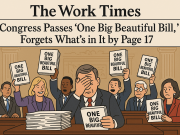
Last week, Apple Fitness+ posted a deceptively simple Instagram teaser: a series of trainers, each holding folded newspapers, obscuring their faces. The image was brief and stylish, a visual punctuation mark that read like the beginning of a story rather than its end. That quiet theatricality did more than spark curiosity among consumers; it sent a ripple through a community that measures productivity in calendar blocks and quarterly outcomes: people who run companies, design hybrid work models, and craft employee wellbeing strategies.
This isn’t just another marketing tease. For the Work news community — HR leaders, workplace strategists, in-house health directors, and operations teams — the implication is clear: Apple may be preparing a move that reframes fitness as an embedded workplace benefit rather than an optional after-hours pastime. What arrives in 2026 could be less about one more streaming workout and more about how movement is woven into the workday, into teams, into company culture, and into the economics of employee health.
Why a single Instagram image matters
Apple has a history of turning cultural undercurrents into mainstream behaviors. The iPhone made mobile email ubiquitous. The Apple Watch normalized continuous health monitoring. Fitness+ itself has already nudged users to couple heart-rate driven metrics with studio-style content. This teaser is notable because it signals a narrative shift: the visual of trainers with newspapers evokes news, routines, and shared ritual — the very fabric of a workday.
For organizations grappling with burnout, chronic health costs, and declining engagement, the question is not merely whether employers will once again subsidize gym memberships, but whether the upcoming Fitness+ iteration will allow employers to embed movement into the structural workflow: synchronized team sessions, micro-movement breaks that integrate with calendar systems, or personalized wellness nudges that respect privacy while improving outcomes.
Potential contours of a workplace-first Fitness+
Based on the tenor of Apple’s previous moves and the options that technology now permits, here are plausible features that could reshape workplace wellbeing:
- Calendar-integrated micro-sessions — Short, five-to-ten-minute guided movements that can be scheduled directly into team calendars, synchronized across participants, and optimized for post-meeting recovery or midday energy resets.
- Company subscriptions with role-aware programs — Licenses tailored to teams or entire organizations where programming adapts not just to fitness level, but to job demands: focused sessions for desk-bound staff, mobility and posture interventions for field workers, and recovery practices for shift workers.
- Team challenges that respect privacy — Aggregated, anonymized participation metrics to drive team-level engagement without exposing individual health data. Leaders can benchmark participation without seeing private biometrics.
- Integrated workflows with the Apple ecosystem — Deeper HealthKit and Apple Watch integrations that tap into sleep, movement, and focus modes to recommend times for short practice sessions, breathing breaks, or posture resets informed by a user’s daily rhythms.
- Hybrid live-on-demand offerings — Coached live sessions that can be joined in virtual or in-office group rooms, supporting synchronous experiences for dispersed teams and enabling the creation of shared rituals that foster belonging.
- Enterprise analytics and ROI tools — Dashboards for wellness officers measuring engagement, absenteeism correlation, and productivity signals to build the business case for wellness programming.
Workday physiology: optimizing for performance, not just calories
The potential power of Fitness+ in the workplace lies in a subtle adjustment in metrics. Historically, fitness programs have sold on weight loss, muscle growth, or minutes exercised. Workplace wellness must sell on cognitive energy, attention bandwidth, and the avoidance of chronic presenteeism. That shifts the product design: short mobility flows to break up sedentary load, breathing and micro-meditation sequences for post-meeting recovery, and standing/stretch prompts that are engineered not to disrupt focus but to restore it.
Imagine an employee whose Apple Watch detects prolonged sedentary time after lunch. Rather than a generic reminder, Fitness+ could offer a two-minute, calendar-aware mobility routine timed between scheduled deep-work blocks. The result is not a dramatic transformation in VO2 max but a measurable improvement in the person’s ability to concentrate for the afternoon sprint.
Implications for employers and workplace design
For HR and operations teams, the arrival of a workplace-oriented Fitness+ will prompt practical decisions:
- Benefits procurement: Will wellness budgets shift from reimbursement models to integrated subscriptions? TCO calculations will change if a single platform can handle individual, team, and population-level wellbeing.
- Hybrid scheduling: If micro-sessions become normative, meeting design will need to account for synchronized breaks. Calendar etiquette will evolve: short movement intervals may become as routine as coffee breaks once were.
- Office space design: Workplaces could reimagine underused corners as movement nodes — low-sensory zones for breathwork, standing hubs for group mobility, or small studios for live sessions.
- Vendor consolidation: Companies may prefer integrated offerings from platform providers rather than stitching together point solutions for fitness, mental health, and health data aggregation.
Privacy, equity, and access
The benefits of an embedded Fitness+ are compelling, but the operational realities contain trade-offs. Employers must avoid three pitfalls:
- Privacy erosion: Seamless health integration is useful only if teams can guarantee that personal biometric data remains under employee control. Aggregated signals are valuable; individual-level health data in HR systems is a liability.
- Digital inequality: Not all employees have the latest devices or a private space to engage in on-camera classes during working hours. Equitable rollouts require device-agnostic options and asynchronous content that does not demand cameras or quiet rooms.
- Cultural imposition: Movement must be offered as an opt-in enhancement to work, not as a metric of team loyalty. When wellness becomes another performance metric, it risks widening divides rather than closing them.
Why 2026 might be the inflection point
Several converging forces make 2026 a plausible inflection year. First, devices such as the Apple Watch have matured enough to provide reliable, continuous signals that can inform personalized nudges. Second, the hybrid work experiment has entered a phase where employers are seeking durable cultural rituals to bind dispersed teams. Third, an emerging commercial appetite among large employers for platform-driven wellbeing solutions makes a B2B pivot both viable and lucrative.
Apple’s design philosophy favors textiles that stitch different behaviors into daily life. If Fitness+ arrives in 2026 with a workplace focus, it will likely emphasize low-friction integration: content that respects time, privacy-first analytics, and the creation of shared rituals that scale from two-person teams to global enterprises.
How leaders should prepare
Whether or not Apple’s next move fulfills these possibilities, workplace leaders should take three pragmatic steps now:
- Map the day: Audit how people actually spend time during their workday. Look for natural break points where micro-movements could be inserted without disrupting workflow.
- Build privacy-first policies: Codify what health data HR can access, what remains employee-controlled, and how aggregated metrics will be used to inform program decisions.
- Plan for inclusivity: Ensure that any tech-driven wellness program includes low-tech and asynchronous alternatives so that participation is an option, not an obligation.
Looking ahead
Apple’s playful Instagram tableau — trainers with newspapers — is an invitation to imagine a new chapter in how technology and work converge. The most resilient workplace wellness programs will be the ones that see movement not as a perk but as an integral part of the day’s architecture: small, repeatable practices that restore cognitive capacity and cultivate shared culture.
For companies, the arrival of a workplace-oriented Fitness+ would be an opportunity to reframe wellbeing as a strategic lever. It would compel leaders to think less about perks and more about practice. It would challenge designers of work to consider not only where work is done, but how it feels — and how the body, in quiet ways, sustains the mind.