









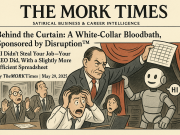

A recently leaked 30-page plan exposes a deliberate, high-budget push by a federal agency to “flood the market” with recruitment messaging. The tools are familiar to anyone who watches feeds and streams: paid influencers, targeted social ads, and a steady drumbeat of sponsored content. But the implications reach well beyond marketing tactics. For the world of work — from talent teams and independent creators to platform designers and employees — this episode is a case study in power, persuasion, and the modern labor pipeline.
What the plan reveals
The document lays out a multipronged strategy: saturate social platforms with short-form content, deploy paid creators across demographics and subcultures, run layered ad buys to dominate search and suggested content, and measure outcomes down to click-through and application rates. The framing is pragmatic and familiar to corporate recruiters: message testing, conversion funnels, and role-specific creative. The difference is the messenger.
Rather than relying solely on traditional civil-service outreach, the agency pivoted to the architecture of attention that rules contemporary digital life. Influencers — some with niche followings, some with mainstream reach — would be compensated to normalize and humanize federal work. Micro-targeted ads would accompany that content, turning broadcasts into a contiguous recruitment experience: discovery on short-form video, deeper engagement via long-form interviews, and finally, the application link embedded in a story or a promoted post.
Why the outreach uptick suddenly feels different
In recent months, many workers have reported an increase in agency outreach: sudden DMs from recruiters, more sponsored posts featuring uniformed employees, and a sharp rise in job ads tailored to local geographies and demographics. The leak helps explain that synchronicity. Rather than isolated campaigns, this is an orchestrated saturation play intended to create inevitability — the sense that a given profession is everywhere and for everyone.
Two features make this approach potent. First, distribution is automated and scalable: programmatic buys keep impressions high where attention is densest. Second, content is native in the vernacular of each platform — not staff bios or flyer PDFs, but snackable stories, colloquial testimonials, and creative hooks designed to survive algorithmic filtering. When recruitment content speaks the language of platforms, it moves fast and blends into everyday discovery.
What it means for workers, creators, and hiring teams
For job seekers, the experience is a new kind of on-ramp: recruitment that meets people where they already spend time. That can be liberating for those who live outside traditional networks or who have been invisible to legacy sourcing methods. At the same time, it raises questions about message clarity and choice architecture: sponsored content is designed to elicit a response, not necessarily to convey the full context of a role.
Creators and influencers find themselves at an inflection point. The creator economy has matured into a service industry for attention, and its participants increasingly monetize messages for third parties. Partnerships with public institutions can offer reliable income and broader reach. But they also carry reputational calculus: how a creator frames a role, discloses paid partnerships, and stands by audience trust matters — both ethically and professionally.
Internal talent teams and HR functions should take note. The tactical playbook borrowed here from marketing — rapid iteration, targeted creative, and funnel optimization — can enhance employer branding. But it also spotlights a tension: when recruitment becomes performative and omnipresent, how do organizations maintain substance beneath glossy content? The answer lies not in abandoning new channels but in marrying creative distribution with transparent, accurate, and values-aligned messaging.
The labor-market dynamics at play
This campaign intersects with broader shifts in work. Labor shortages, demographic shifts, and the rise of contingent labor have encouraged employers to explore wider talent pools. Digital recruitment lowers friction and reduces geographic constraints, but it also accelerates competition for attention. When a large public employer invests heavily in captive feeds, private employers and nonprofits discover a new reality: talent pipelines are now contested in real time and at scale.
There are downstream effects for retention and internal culture too. If onboarding surges because of slick external messaging, organizations may face mismatched expectations. Workforce leaders must be prepared to translate recruitment rhetoric into lived experience; otherwise, initial hires may become churn statistics rather than long-term contributors.
Transparency, trust, and the architecture of platforms
The episode underscores a central structural question of our era: who gets to pay for attention, and how visible is that transaction? Platforms offer varying levels of ad transparency, and creator partnerships range from full disclosure to subtle native integrations. For civic-minded audiences, the distinction matters. Government-funded messaging carries public consequences that private advertising does not, and the public interest in transparent sourcing is legitimate.
Platforms can be part of the solution. Ad libraries, sponsorship tags, and clearer labeling make it easier for audiences to understand why a message appears in their feed. But these features must be usable and enforced. When reach is engineered through layers of sponsorship and amplification, clarity can get lost — intentionally or not.
Ethical and civic considerations for the workplace
Recruitment is rarely neutral. It frames the contours of how a job is imagined by a society. Large-scale campaigns by public agencies invite reflection on what kinds of roles get prioritized for attention and why. They also prompt worker communities to consider the boundaries between civic service and personal values.
For companies and organizations designing recruitment campaigns, the lesson is twofold: adopt platform fluency, and pair it with ethical guardrails. That means explicit disclosure, truthful representation of duties and conditions, and channels for meaningful follow-up conversation — not just application clicks. It means designing talent experiences that respect both the psychology of persuasion and the dignity of applicants.
Practical takeaways for the Work news community
- Read recruitment messaging with a critical eye. Sponsored content is optimized for action; dig beyond the hook to find role specifics, working conditions, and career pathways.
- Creators should codify disclosure and editorial boundaries. Clear statements about compensation and creative control protect audiences and creator brands alike.
- Employers seeking to modernize outreach should invest as much in onboarding and retention as they do in acquisition. A funnel that ends with disillusioned hires is an expensive one.
- Platforms and policy advocates should push for standard ad transparency and accessible sponsor attribution, especially for public-sector campaigns.
Where this leaves the labor ecosystem
The leaked plan is a reminder of how quickly tools of persuasion migrate from commerce to civic life. The techniques — influencer partnerships, programmatic buys, creative testing — are agnostic to mission; they amplify whatever content is fed through them. That neutral capacity imposes ethical obligations on participants, and it should invite scrutiny from workers, communities, and institutions that care about how careers are framed and who gets to frame them.
For the Work news community, the story is not only about a single agency’s tactics. It is about the broader reconfiguration of attention, labor, and reputation in an era where a message can be multiplied and targeted with unprecedented precision. It is an invitation to reclaim narrative agency: to demand clarity from recruiters, accountability from platforms, and responsibility from those who monetize the attention of others.
Final thought
Recruitment will continue to migrate into the feeds and stories that structure daily life. That migration need not be malign. When paired with transparency, thoughtful briefing, and a commitment to aligning promises with practice, modern outreach can expand opportunity and diversify talent. But without those guardrails, a barrage of polished content risks reshaping careers into click-driven commodities. The choice — and the civic conversation — is ours.